
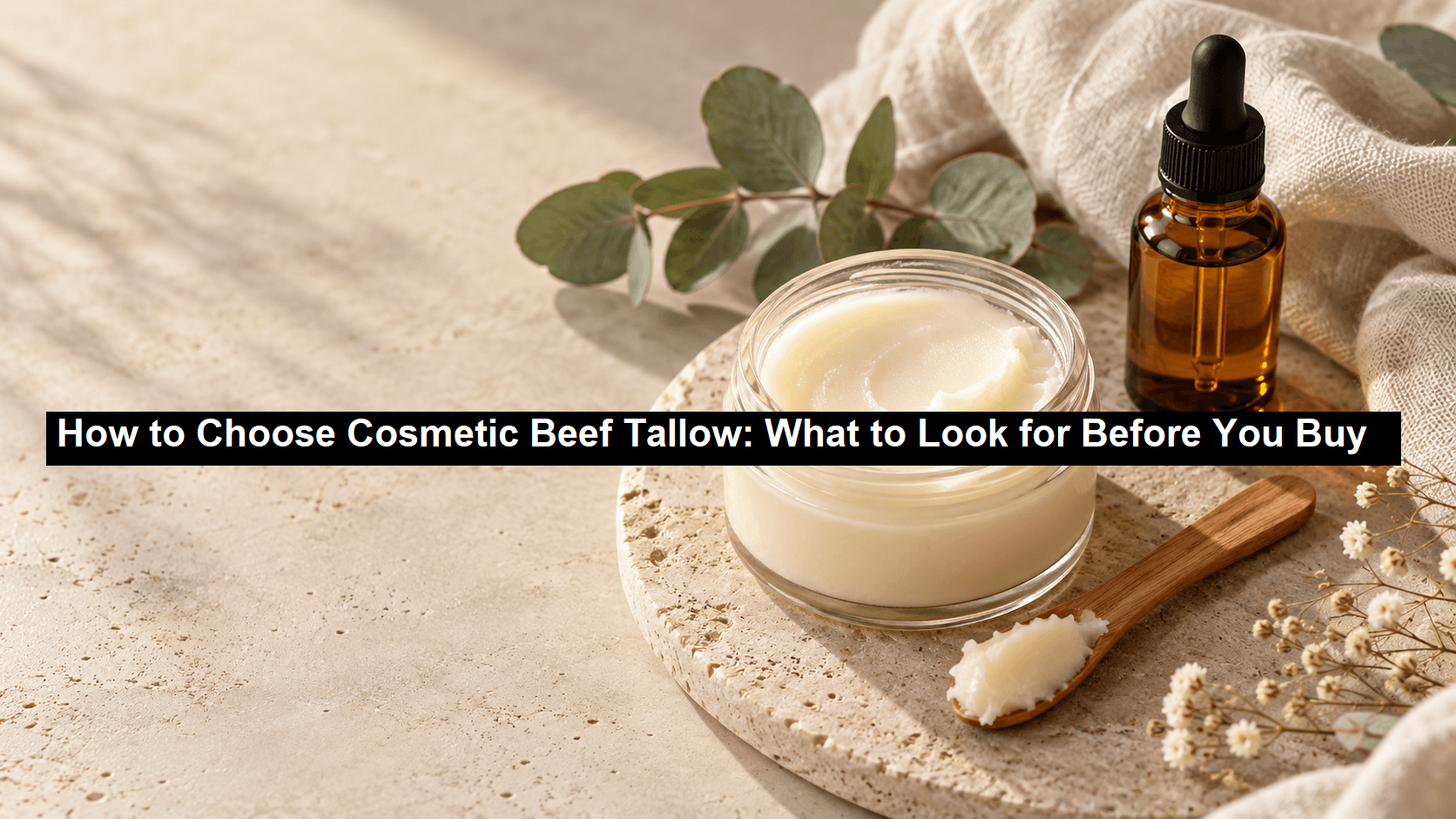
Not all Beef Tallow is created equal. Two products might look almost identical, yet differ significantly in their sourcing, processing, purity and suitability for skincare.
With Beef Tallow becoming increasingly popular in natural skincare, choosing the right product can feel confusing. Should you look for grass-fed sourcing? Does colour matter? And what exactly makes tallow suitable for cosmetic use?
Understanding these details can help you avoid poor-quality ingredients and make more informed purchasing decisions. Whether you’re experimenting with homemade skincare or sourcing ingredients for a small cosmetic business, knowing what to look for is essential.
This guide explains the key factors worth checking before buying Cosmetic Beef Tallow, from ingredient quality and texture to supplier transparency and storage.
Table of Contents
- Understanding Cosmetic-Grade Beef Tallow.
- Check the Source and Processing Method.
- Evaluate Texture, Colour and Smell.
- Look for Ingredient Purity and Quality Information.
- Understand Safety and Storage Requirements.
- Compare Packaging, Quantity and Price.
- Quick Buying Checklist.
- Choose Quality Over Marketing Claims.
Understanding Cosmetic-Grade Beef Tallow
Beef Tallow is an animal-derived fat produced through rendering, a process that separates fat from moisture and other materials using heat.
Traditionally used in soap making and personal care, it has recently attracted renewed interest as an ingredient in balms, body butters and moisturisers.
Cosmetic-grade tallow is generally processed and prepared for use in personal care formulations. However, the term alone does not guarantee a particular level of purity, safety or quality.
That is why it is important to look beyond the label and examine how the ingredient has been sourced and processed.
Tallow contains fatty acids such as stearic, palmitic and oleic acids, which contribute to its rich consistency and skin-conditioning properties. As an emollient, it may help soften the skin and reduce the feeling of dryness.
According to DermNet’s guide to emollients and moisturisers, oily ingredients can help smooth the skin, while occlusive ingredients can reduce moisture loss.
However, research specifically examining the benefits and safety of Beef Tallow on human skin remains limited. It is best viewed as a cosmetic ingredient rather than a proven solution for particular skin conditions.
Check the Source and Processing Method
When choosing Cosmetic Beef Tallow, the origin of the raw material is one of the first details worth investigating.
Some products are sourced from grass-fed cattle, while others come from animals raised using different feeding practices.
For buyers interested in ingredient traceability, grass fed beef tallow provides one option to consider. The important thing is to look for clear sourcing information, including the country of origin, the type of fat used and how the material has been processed.
Grass-fed sourcing may reflect your preferences regarding agricultural practices, but it does not automatically mean the finished tallow performs better in skincare.
Read: How to Choose a Signature Scent That Feels Like You
Why the rendering process matters
Rendering influences the final ingredient’s appearance, smell and consistency.
Poorly controlled processing can leave behind unwanted moisture or impurities, while appropriate refining can produce tallow with a more consistent appearance and milder aroma.
Before purchasing, consider asking:
- Is the tallow rendered specifically for cosmetic applications?
- Has it been filtered or refined to remove unwanted materials?
- Is the country of origin clearly identified?
- Does the supplier explain the processing method?
- Is information available about the fat used in production?
These details are particularly useful if you’re making skincare products and need consistent results between batches.
Evaluate Texture, Colour and Smell
The appearance and feel of Cosmetic Beef Tallow can reveal useful information about its processing and handling.
At ordinary room temperatures, Beef Tallow is typically solid or semi-solid. It softens as it warms, making it useful for rich skincare formulations.
What should good-quality tallow look like?
Although characteristics vary depending on processing, you can generally expect:
- Colour: Creamy white to pale yellow, depending on the source and refinement.
- Texture: Firm at cooler temperatures, becoming softer with warmth.
- Smell: A mild, characteristic fatty aroma that may be less noticeable in more refined products.
- Consistency: Relatively uniform, without obvious foreign particles or unusual separation.
A strong rancid odour or visible contamination should raise concerns. However, colour alone cannot confirm the quality or freshness of tallow.
Consider the texture of your finished product
Think about how you intend to use the ingredient.
Tallow’s rich consistency may work well in thicker balms and body butters, but it can feel heavy for people who prefer lightweight skincare.
For a softer formulation, some makers combine tallow with liquid cosmetic oils. For example, jojoba oil can be considered when exploring ways to add slip and create a more spreadable texture. Jojoba is a liquid wax ester, making it a useful ingredient in many personal care formulations.
The ideal combination depends on your intended product, preferred consistency and appropriate formulation testing.
Look for Ingredient Purity and Quality Information
A product described as ‘natural’ is not necessarily pure, and a higher price does not always indicate better quality.
Rather than relying on packaging claims, look for specific details about the ingredient itself.
Check the ingredient information
If you’re buying pure Cosmetic Beef Tallow, the supplier should clearly identify its contents.
Look for information such as:
- Ingredient name and cosmetic INCI identification.
- Whether the product is pure tallow or a blended formulation.
- Country of origin and processing details.
- Batch identification and relevant quality documentation.
- Any added fragrance, colourant or other ingredients.
The Australian Competition and Consumer Commission advises consumers to check cosmetic ingredient information to help identify potential allergens and irritants.
For finished cosmetic products, ingredient labelling requirements also apply under Australian consumer safety rules.
Ask for documentation where appropriate
If you’re purchasing tallow for commercial cosmetic manufacturing, supplier documentation becomes especially important.
Depending on the supplier and intended use, you may want to request a certificate of analysis, relevant product specifications or a safety data sheet.
These documents can help you understand the ingredient’s characteristics and support quality control.
Remember that ‘cosmetic grade’ is not a substitute for reviewing a supplier’s evidence of quality.
Understand Safety and Storage Requirements
Even naturally derived ingredients can deteriorate when handled or stored incorrectly.
Like other fats, Beef Tallow can undergo oxidation over time. Heat, light and exposure to air may influence its freshness and shelf life.
To maintain product quality:
- Store tallow in a tightly sealed, clean container.
- Keep it in a cool, dry location away from direct sunlight.
- Avoid introducing water or contaminants during handling.
- Use clean, dry utensils when removing tallow from its container.
- Follow the supplier’s recommended storage conditions and shelf life.
If you’re preparing homemade skincare, pay particular attention to hygiene.
The US Food and Drug Administration’s guidance on microbiological safety explains that contamination can occur through raw ingredients, water and unsuitable manufacturing conditions.
An oil-based balm without added water presents different preservation challenges from a water-containing cream. Adding water or water-based ingredients can introduce a need for an appropriate preservative system and additional testing.
Is Beef Tallow suitable for every skin type?
Not necessarily.
Some people may enjoy its rich, conditioning texture, particularly in products intended for dry-feeling skin. Others may find it too heavy, especially when used on the face.
The American Academy of Dermatology recommends testing new skincare products on a small area before incorporating them into your regular routine.
Stop using a product if irritation develops, and seek professional advice if you have persistent skin concerns.
Compare Packaging, Quantity and Price
Buying Cosmetic Beef Tallow is not simply about finding the lowest price per jar.
Consider how much you need, how frequently you’ll use it and whether the packaging will protect the ingredient during storage.
For occasional home use, smaller quantities may be more practical. Purchasing a large container could be wasteful if you cannot use the contents within the recommended shelf life.
Businesses making skincare in larger batches may benefit from bulk purchasing, provided the ingredient quality remains consistent.
What should you compare?
| Factor | What to Look For | Why It Matters |
| Source | Clear animal origin and sourcing details. | Helps establish traceability. |
| Processing | Rendering and refining information. | Helps assess consistency and suitability. |
| Purity | Clearly identified ingredients. | Reduces uncertainty about additives. |
| Packaging | Secure, suitable containers. | Helps protect against contamination. |
| Shelf life | Storage directions and relevant dates. | Supports sensible stock management. |
| Price | Cost per 100 g or kilogram. | Makes different pack sizes easier to compare. |
| Supplier support | Accessible product information. | Helps you make informed decisions. |
A useful approach is to compare the cost per unit rather than the total purchase price.
A larger pack may appear cheaper but offer little value if much of it expires or deteriorates before use.
Quick Buying Checklist
Before placing an order, take a moment to review these essential questions.
1. Is the product intended for cosmetic use?
Check that it is described as suitable for skincare or cosmetic formulation rather than assuming any rendered fat will be appropriate.
2. Can you verify where it comes from?
Look for information about animal sourcing, country of origin and the raw material.
3. Are the ingredients clearly identified?
Check whether you’re purchasing pure tallow or a preparation containing additional ingredients.
4. Is the supplier transparent about quality?
Reliable suppliers should be able to explain product specifications and provide relevant information.
5. Is the quantity suitable for your needs?
Consider how quickly you’ll use the ingredient and whether you have appropriate storage conditions.
6. Does it suit your intended formulation?
A thick balm, soap and lightweight moisturiser have different formulation requirements. Choose ingredients based on the finished product you’re trying to create.
For commercial skincare makers, it’s also worth checking the Australian Industrial Chemicals Introduction Scheme’s guidance on cosmetic products to understand how cosmetic ingredients are regulated.
Choose Quality Over Marketing Claims
Cosmetic Beef Tallow can be a useful ingredient in traditional and modern skincare formulations, but choosing the right product requires more than following a popular trend.
A 2024 scientific review of tallow and skin compatibility highlighted the need for more human research into its cosmetic applications and potential side effects. This is an important reminder to approach exaggerated skincare claims with caution.
Instead, focus on the factors you can assess: sourcing, processing, purity, documentation, appearance and storage.
Whether you’re making your first homemade body balm or developing a commercial skincare product, taking the time to investigate these details can help you make a more confident and practical choice. Ultimately, the best Cosmetic Beef Tallow isn’t necessarily the most expensive or heavily marketed option. It’s the one with clearly documented quality, suitable characteristics and a reliable supply that meets your intended needs.