
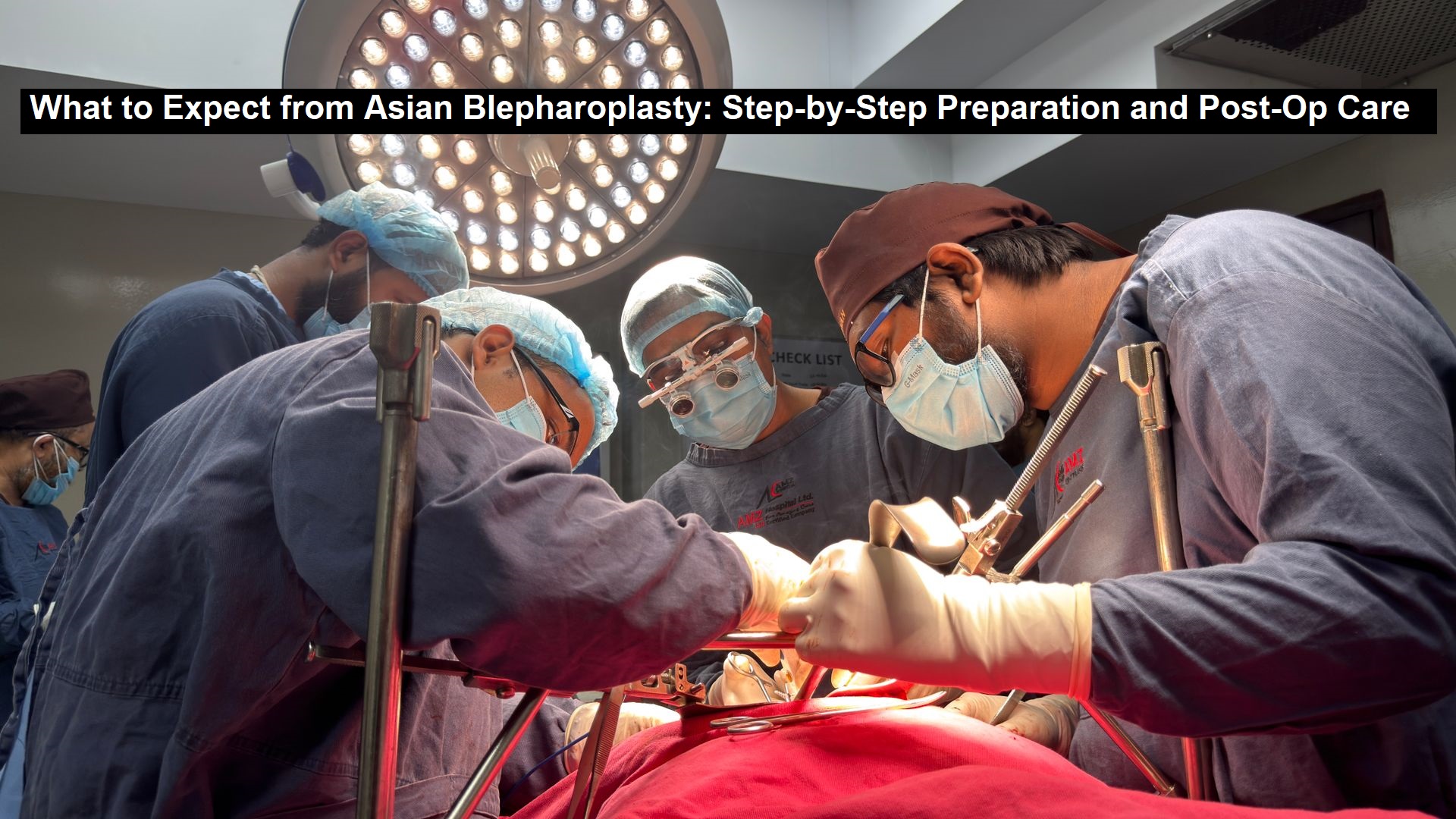
This surgery is considered one of the most complicated eye surgeries but not because it’s difficult in its nature. The margin for error is so narrow, and the expectations for the final results are so distinct that only a specialized surgeon in this field should perform it. This guide is to give you a general idea of what to expect from your initial consultation to your six-month check-up.
Understanding the anatomy – and the goal
The structure of the Asian eyelid is different in a way that is meaningful surgically. In East Asian eyelids, the orbital septum inserts more inferiorly on the eyelid margin. This results in fat prolapsing more inferiorly, and the eyelid-marginal fat pads are more prominent. This is one of the reasons why the supratarsal crease is either absent or not as defined. The monolid is not a deficiency but a different anatomical configuration. The best surgeons would know that.
The goal is not to Westernize eyes. Such a frame creates a superficial understanding of the patient’s desires as well as the surgeon’s responsibilities. The goal for any patient is to have a natural-looking crease. The crease should ideally be in harmony with the patient’s eye design, face width, and skin thickness. Creating a new fold can sometimes unravel the beauty of the eye. Patients come to a consensus between in-fold (the crease does not cross the inner corner skin fold), out-fold (the crease crosses the inner-corner area and extends slightly above), or tapered in-out fold. Not all eyelids are the same. The right crease can make all the difference.
Blepharoplasty is one of the top three most commonly done cosmetic surgeries worldwide, according to the International Society of Aesthetic Plastic Surgery, with over 1.4 million patients annually. It is so widely sought and consistently practiced for good reason. It has been done for decades which has allowed surgeons to refine their techniques.
The pre-operative consultation
The pre-op consultation is important. It’s not just a professional formality; it’s where your surgeon makes the necessary decisions about how to give you the best, most natural-looking double eyelids possible. You’ll probably be asked to bring photos to show what you like and to discuss how you envision your eyes looking after surgery. Your surgeon needs to know what’s important to you before they can determine what’s possible.
They’ll also do a physical exam, checking the strength and position of your levator muscles and assessing your skin and fat distribution. They may take measurements or photographs. And they will discuss your surgical options. For double eyelid surgery, you can choose from two methods: incisional and non-incisional. For younger patients with few or no wrinkles in their upper eyelids, the non-incisional method is preferred because it leaves no visible scars. For patients who need less eyelid exposure – where their eyes naturally open wide even without well-defined double lids – the non-incisional method is also generally recommended. In this case, a few micro-incisions may be used to get the perfect balance.
The surgeon may also recommend the non-incisional method if you have a medical history that makes incisions riskier. For everyone else (and some patients who choose the non-incisional method), the incisional approach allows the surgeon to see exactly what they’re working with and to make the most precise adjustments. It’s usually how both the eyelid crease and the best possible double lid for your face are created. Your surgeon might combine elements of both methods for the best results.
Remember that the best surgeons will hear you out and give you options without making false promises. That means they will let you know if your eyes can’t look like the pop idol you aspire to. And even if they can, but only after gradual progression with multiple revision surgeries, a good surgeon will give you respectable advice about keeping a natural look that fits your facial structure.
Choosing between the suture and incisional methods
This is one of the most important decisions in the process, and it’s made collaboratively between you and your surgeon based on your anatomy.
The suture method, sometimes called the non-incisional method, uses fine permanent threads to anchor the eyelid skin to the levator aponeurosis or tarsal plate beneath, creating a crease without cutting tissue. It’s appropriate for younger patients with thinner eyelid skin, minimal fat in the upper lid, and no significant hooding. Recovery is faster, swelling resolves more quickly, and there are no incision scars to manage. The trade-off is longevity – in patients with heavier lids or more fat, the sutures can loosen over years as the tissue changes.
The full incisional method involves removing a carefully measured strip of skin and, where needed, some of the underlying fat. This is the right approach for patients with thicker skin, excess upper lid tissue, hooding, or anyone who wants a permanent result that won’t change as they age. The recovery is longer and requires more active scar care, but the crease it creates is stable.
For patients seeking world-class precision, exploring the specialized techniques of Korean eye surgery reveals why Seoul has become a premier destination for those wanting highly customized, natural-looking double eyelid results. South Korean surgeons have developed refined approaches that prioritize ethnic anatomy – a distinction that’s earned the country its reputation for this work.
The surgical day
A majority of Asian blepharoplasty procedures are carried out using local anesthesia with IV sedation. It is not a full-on unconscious experience, but rather you feel relaxed and at ease. The procedure usually lasts from an hour to two hours, based on whether or not other procedures are taking place simultaneously.
Following the surgery, you will be required to stay in the recovery room until the sedative wears off. Your eyes will feel heavy and tight. Swelling starts right away – and it is quite evident. You might have slightly blurry vision due to the ointment that is administered while the procedure is ongoing. You will need someone to drive you home and you can’t do much else that day.
You will be given written instructions for postoperative care, a follow-up appointment for the removal of sutures in case you had the incisional procedure, and specific instructions regarding your medication, which may include antibiotic ointment or drops, and occasionally a short term of anti-inflammatory medication.
Read: 4 Easy Wins For a Healthier, Happier You
The first week of recovery – day by day
For the initial three days, you’ll want to face the cold. Cold compresses can be your best friends after eyelid surgery. Apply them gently to the area around your eye – remember, you don’t want to put pressure on the incision site. Apply the compress for 15-20 minutes, and then feel free to reapply as you wish that first day. These first days, the more the merrier with the compress. Cold compresses reduce early swelling and can help cut down on bruising. You’ll also realize putting a cool compress on the area will simply feel good, alleviating some of the irritation that is natural to the healing process.
You’ll also want to sleep with your head elevated between 30 to 45 degrees. This is a good practice every night, but it’s particularly important for your first week or so after eyelid surgery. Swelling can accumulate under your eyes, as fluids move down with gravity when you’re sleeping. If you sleep flat, you’ll wake up puffier each morning. If you’re elevated, the swelling goes down.
On the fourth day post-op, switch to warm compresses. The cold compresses constricted the blood vessels, which is a good thing as it meant less blood and serum leaked out into the surrounding tissue. Now, with the cold switching to warm, you want to encourage circulation to help reabsorb that tissue fluid. Warm is also more soothing, and helps those bruises yellow and disappear.
The psychological timeline – what no one warns you about
The most challenging part of recovery post-Asian eyelid surgery is typically the two-to-four-week period that tends to get glossed over when describing the overall “two to four months” recovery. This is before the crease has softened at all. Before you have any real sense of how the final result may look.
Swelling is everywhere, but it’s uneven. Each eye swells and heals on its own schedule (and your eyes are seldom symmetrical to begin with.) This can make you question whether the crease is being placed in the same spot on each eye. It’s likely it is. This phase is always the most emotionally trying because you invested all the physical and emotional energy in making this happen and you left the surgery center with more bandages and bruising than you ever imagined. And you wake up the next few days with swelling everywhere and it looks like nothing at all got done.
The anxiety that comes with the temporary swollen, puffy, and lumpy appearance after surgery – and how everything completely closes up for the first three weeks – is the hardest part for most people. They didn’t know that part was coming though, even if you told them. They somehow thought that everything would look and stay looking like what they saw for the few hours they were awake before surgery.
Long-term scar care and sun protection
Patients who underwent incisional blepharoplasty should be careful when exposed to sunlight during the first six months following surgery. The incision line will hyperpigment if exposed to the sun during this period. Wear sunglasses when you’re out and about. Apply mineral sunscreen around the eye area when necessary. This is not optional and directly influences how visible your final scar will be.
Warning signs that need immediate attention
Most recoveries are not eventful. But it’s catching the minor stuff before it can become major.
Call your surgeon if you have to deal with severe pain that’s actually getting worse, not better, any sudden vision changes, yellow or green discharge at the incision, redness that’s spreading outside of the immediate surgical area, or warmth and hardness apparent around the incision. These signs could indicate infection or, in rare instances, a hematoma. Both are manageable when caught early.
Moderate swelling, bruising that becomes deeper before fading, and some itching of the healing incision are normal.
Getting to the result
Patients who get the best results from this surgery are those who have reasonable expectations, are compliant with their post-operative care, and allow themselves the necessary recovery time without prematurely assessing their results. The effect of surgery done by a skilled surgeon who honors the anatomy they have to work with is a result that appears natural since it is in harmony with the face. The process of preparing for surgery as well as the healing period after surgery are not separate from the desired result, but they are an essential component of it.